
If you’ve noticed a crack in your wall, a gap around a window, or a crack running through your brick exterior, you’re probably asking yourself the same question many Dallas homeowners do:
Is this normal, or is my foundation in trouble?
The truth is, not every crack means you need immediate repairs. However, ignoring the wrong type of crack can lead to more expensive structural damage over time.
At Church Foundation Repair, we’ve helped homeowners throughout North Texas identify the difference between cosmetic settling and serious foundation movement. Understanding what causes foundation cracks, and knowing when it’s time to call a professional, can save you thousands of dollars in future repairs.
Why Foundation Cracks Are So Common in Dallas
One of the biggest reasons homeowners need dallas foundation repair is the region’s unique soil conditions.
Dallas Clay Soil Foundation Movement
Much of the Dallas-Fort Worth area sits on expansive clay soils. These soils absorb moisture during rainy periods and shrink dramatically during hot, dry weather.
This constant cycle causes your home’s foundation to move slightly throughout the year.
Over time, this movement can create:
- Interior drywall cracks
- Exterior brick cracks
- Uneven concrete
- Doors and windows that no longer close properly
- Small gaps around trim and molding
These north texas foundation issues are extremely common, but that doesn’t mean they should be ignored.
When Foundation Cracks Are Usually Normal
Not every crack indicates structural failure.
Small hairline cracks often develop as a home naturally settles, especially in newer construction.
Generally, you can monitor a crack if it is:
- Less than 1/8 inch wide
- Straight and vertical
- Not growing over time
- Not accompanied by other structural symptoms
Even so, it’s a good idea to document the crack with photos and measure it every few months.
If you’re unsure whether a crack is cosmetic or structural, our guide on what to do when you find cracks in your walls provides additional information about what to look for.
Warning Signs You Shouldn’t Ignore
Some cracks deserve immediate attention because they often indicate foundation movement.
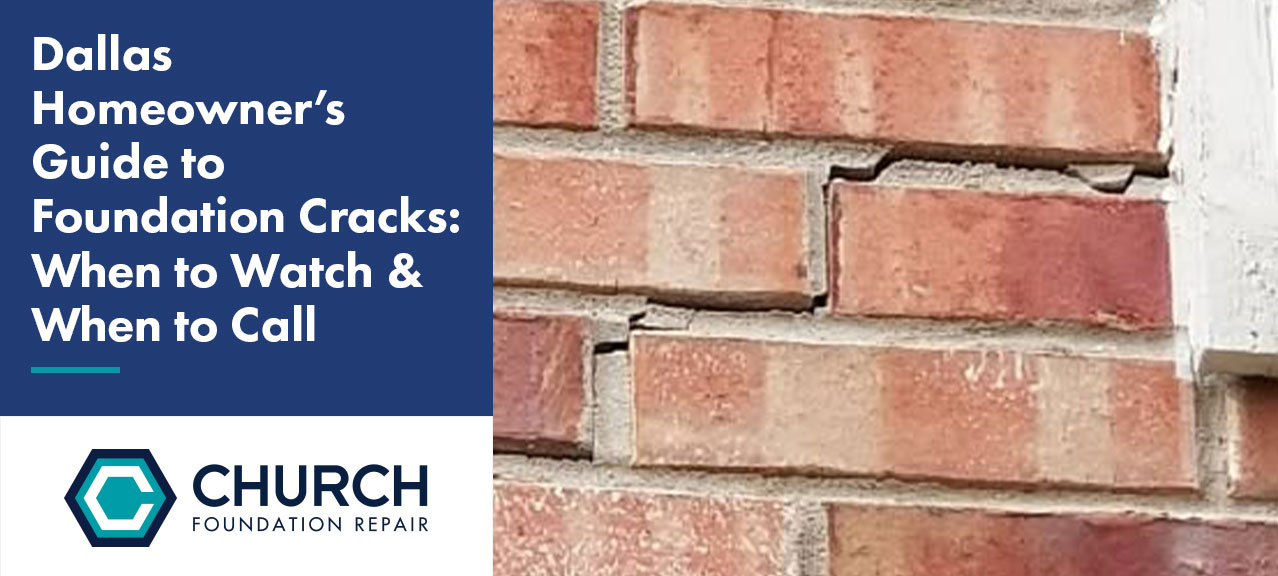
Large Stair-Step Brick Cracks
One of the most common signs requiring dallas foundation repair is stair-step cracking in brick.
These cracks in brick Dallas homeowners notice often follow the mortar joints in a staircase pattern.
If the cracks continue growing or widen over time, it’s worth scheduling an inspection.
Horizontal Foundation Cracks
Horizontal cracks in concrete or foundation walls are more concerning than vertical cracks.
These may indicate pressure against the foundation or structural movement that requires professional evaluation.
Wide Interior Cracks
Drywall cracks wider than 1/4 inch, especially those extending from doors or windows toward the ceiling, often suggest significant movement.
Your Home Is Showing More Than Just Cracks
Foundation movement rarely appears as only one symptom.
Watch for combinations like:
Sticking Doors and Windows
If you’ve noticed sticking doors Dallas home owners frequently complain about, foundation movement may be causing your door frames to shift.
Doors that suddenly rub, won’t latch, or swing open on their own deserve attention.
Uneven Floors
Sloping or sagging floors are another common warning sign.
Many homeowners searching for uneven floors Dallas solutions discover their foundation has shifted over time.
If a ball rolls across your floor by itself or furniture no longer sits level, it’s worth having your foundation evaluated.
Gaps Around Windows and Trim
As a home shifts, small separations can develop between walls, ceilings, crown molding, or window frames.
These changes often appear gradually, making them easy to overlook until they become more noticeable.
What Causes Foundation Movement in North Texas?
Several factors contribute to foundation problems throughout the Dallas area.
Expansive Clay Soil
The biggest culprit remains the Dallas clay soil foundation conditions found throughout North Texas.
These soils can expand several inches after heavy rainfall and shrink dramatically during drought conditions.
Poor Drainage
Water collecting around your home’s foundation softens the soil and creates uneven support beneath the slab.
Keeping gutters clean and ensuring downspouts direct water away from your home helps reduce risk.
Tree Roots
Large trees can remove significant amounts of moisture from surrounding soil.
This uneven drying can cause portions of the foundation to settle differently than others.
Plumbing Leaks
Underground plumbing leaks can saturate soil beneath your home, causing sections of the foundation to shift unexpectedly.
When Should You Call a Foundation Repair Professional?
If you notice multiple symptoms occurring together, don’t wait for the problem to worsen.
Consider scheduling an inspection if you experience:
- Growing wall cracks
- Stair-step brick cracks
- Doors or windows that suddenly stick
- Uneven or sloping floors
- Large gaps around windows or trim
- Cracks that continue expanding over time
An experienced professional can determine whether your home is simply experiencing seasonal movement or requires repairs.
If repairs are necessary, learn more about our residential foundation repair services and how we help homeowners restore stability to their homes.
Why Local Experience Matters
Foundation issues vary significantly depending on local soil conditions.
Working with a contractor who understands north texas foundation issues means your home is evaluated with the region’s expansive clay soils and seasonal weather patterns in mind.
Church Foundation Repair has extensive experience serving homeowners throughout the area, including our Dallas service area, where shifting soils create unique challenges for residential foundations.
Don’t Wait Until Small Cracks Become Big Repairs
Small cracks don’t always require immediate repairs, but they should never be ignored.
Monitoring changes early can prevent larger structural issues and help protect one of your biggest investments.
If you’ve noticed cracks, sticking doors, uneven floors, or other signs of foundation movement, the best next step is a professional evaluation.
Contact Church Foundation Repair for an honest assessment and expert recommendations. You can schedule your foundation inspection here and get the answers you need before small problems become costly repairs.