
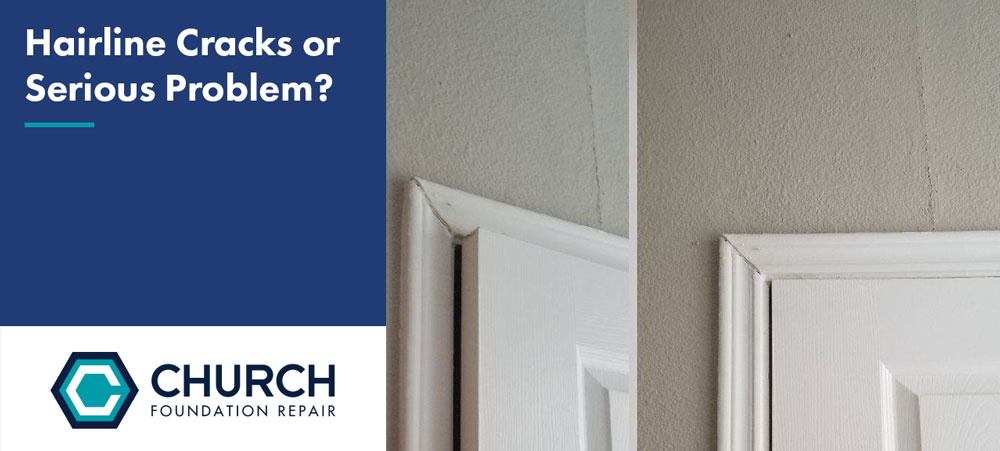
You notice a crack in your wall or slab and wonder if it is something to worry about. In Texas, where expansive clay soils shift constantly with rain and drought cycles, foundation cracking is common. That does not mean every crack is an emergency. But some absolutely are.
Here is how to tell the difference, and what to do next if you own a home in Central Texas. The team at Church Foundation Repair has been helping Texas homeowners sort this out for over 35 years.
Not All Cracks Are Equal
A hairline crack in drywall or concrete is often nothing more than normal settling. Homes move slightly over time, and minor surface-level cracks are a natural byproduct of that movement. The problem is that serious structural cracks can look similar to minor ones in their early stages.
The key factors that separate a cosmetic crack from a warning sign are width, direction, location, and whether the crack is growing.
Cracks That Are Likely Minor
These types of cracks are typically low concern for Texas homeowners:
- Hairline cracks less than 1/16 inch wide in drywall or plaster
- Thin horizontal cracks along mortar joints in interior walls
- Small shrinkage cracks in a relatively new concrete slab
- Isolated cracks that have not changed in months or years
Cracks That Deserve a Closer Look
The following cracks are worth having a professional evaluate, especially in markets like Houston where heavy clay soils and moisture swings are severe:
- Diagonal cracks running from the corners of doors or windows
- Stair-step cracks in exterior brick
- Cracks wider than 1/4 inch
- Cracks that are wider at one end than the other
- Any crack accompanied by a sticking door, sloping floor, or visible gap between the wall and ceiling
Why Texas Soil Makes This Harder to Ignore
Homeowners in Houston deal with some of the most challenging soil conditions in the country. The expansive clay beneath most Texas homes absorbs moisture during wet seasons and shrinks during dry ones. This constant movement puts stress on slab foundations year after year. A crack that looks minor in the spring can worsen significantly after a dry summer.
When to Call a Foundation Specialist
If you are seeing multiple warning signs, or if a crack has grown since you first noticed it, do not wait. A free foundation inspection from a local specialist will give you a clear picture of what you are dealing with. In Houston, Dallas/Fort Worth, and Austin, Church Foundation Repair provides no-obligation inspections with written, photo-documented reports.
Early action almost always means lower repair costs. A crack that is ignored for a season or two can develop into a structural issue that costs significantly more to correct.
Schedule Your FREE Foundation Inspection Today — No Obligation