
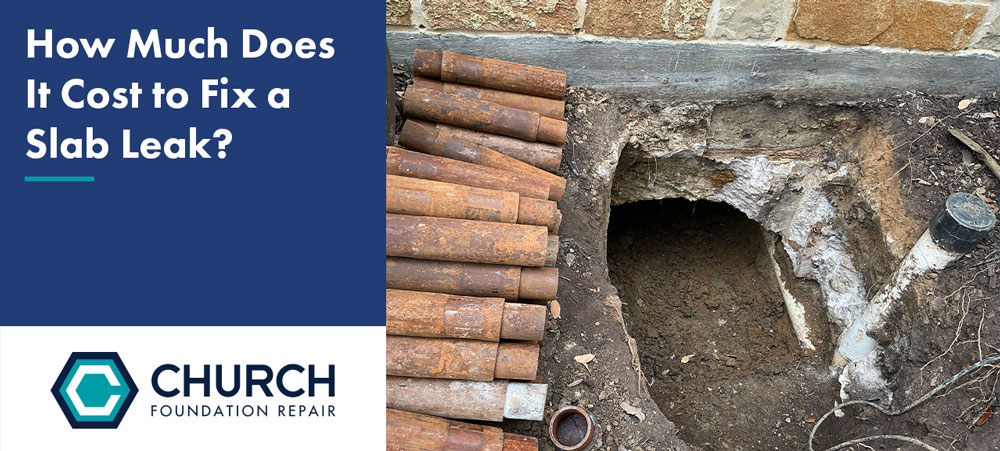
A slab leak is one of those problems homeowners hope they never have to deal with—but Texas homes with slab foundations and aging plumbing are especially vulnerable.
If you suspect water leaking beneath your slab in the Houston, DFW, Austin, or San Antonio areas, it’s natural to ask how much this will cost and whether you should call a team like Church Foundation Repair right away.
The cost to fix a slab leak can vary widely depending on the location of the leak, the condition of your plumbing, and whether the leak has already caused foundation or structural damage.
Understanding what drives those costs—and how Church Foundation Repair approaches slab and plumbing issues—can help you plan your next steps and avoid bigger problems down the road.
What is a slab leak?
In many Texas homes, water and sewer lines run beneath the concrete slab foundation.
A slab leak happens when one of these lines develops a crack, break, or loose joint that allows water to escape into the soil and, sometimes, into your home.
Common signs of a slab leak include:
- Unexplained higher water bills
- Warm or damp spots on floors
- The sound of running water when fixtures are off
- Cracks appearing in floors or walls near the leak
- Mildew or musty odors
Left untreated, a slab leak can soften the soil under your slab, contribute to foundation movement, and create a cycle of damage that affects both your plumbing and your structure.
That’s why many slab leaks are best handled by a team that understands both underground plumbing and foundation behavior.
What affects the cost of slab leak repair?
Because every house is different, the cost to fix a slab leak is not a simple flat number.
Several key factors influence the total investment:
- Location of the leak:
A leak directly beneath a bathroom may be easier to reach than one under the middle of the house or beneath a finished room with wood or tile floors. - Type of line:
Freshwater lines and sewer lines require different repair approaches, tools, and materials. - Access method:
Some leaks can be reached by tunneling from the outside; others may require accessing the line from above by opening a small section of slab. - Extent of damage:
If the leak has been active for a long time, there may be additional work needed to stabilize the foundation or repair damaged flooring and finishes. - Number of leaks:
In some cases, locating one leak reveals additional weak spots or breaks that need to be addressed at the same time.
A thorough evaluation should identify where the leak is, what caused it, and what repairs will provide a long-term solution—not just a patch that fails again in a few months.
Why slab leaks can’t wait
It can be tempting to ignore a suspected slab leak when it’s not causing obvious flooding or visible damage yet.
However, water under your slab is constantly changing the soil conditions that support your foundation.
Over time, this can lead to:
- Uneven foundation movement as soils soften or wash away
- Cracks in your slab and walls as the structure shifts
- Gaps under the slab that allow further movement and damage
- Mold growth in hidden spaces if moisture reaches floors or walls
Addressing a slab leak promptly can limit damage to your structure and help you avoid the added cost of future foundation repair.
In some cases, insurance may also have specific requirements about how quickly leaks are addressed, so waiting can complicate coverage discussions.
How a professional evaluates and repairs a slab leak
When you call a professional for a suspected slab leak, you should expect a step-by-step process designed to locate the leak accurately and recommend a repair that fits your home.
This typically includes:
- Listening to your concerns and reviewing the signs you’ve noticed
- Performing tests to confirm a leak and pinpoint its location
- Evaluating the condition of nearby plumbing lines and the foundation
- Presenting repair options, including access methods and restoration needs
Depending on what the evaluation reveals, repairs might involve:
- Tunneling to access and repair or replace sections of pipe
- Opening a controlled section of slab for direct access to the problem area
- Re-routing lines around trouble spots when direct repair is not practical
- Coordinating with foundation repair work if movement has contributed to the leak
When plumbing and foundation teams work together, you benefit from a repair plan that addresses both the symptom and the underlying causes, helping protect your home over the long term.
Investing in your home’s foundation and plumbing
While slab leak repair is a significant project, it’s also an investment in the health of your home.
Stopping the leak and stabilizing the affected area helps protect your foundation, preserve your flooring, and prevent further damage to your walls and finishes.
A clear, written estimate and explanation of work can help you understand exactly what you’re paying for and why it matters.
If you’re unsure about the scope of work, don’t hesitate to ask questions until you’re comfortable with the plan.
When to call a slab leak and foundation expert in Texas
If you live in the Houston, DFW, Austin, or San Antonio areas and suspect a slab leak, it’s important to get a professional evaluation instead of guessing.
The combination of clay soils, expansive movement, and aging plumbing means small leaks can turn into major structural issues if left alone.
Church Foundation Repair offers evaluations for slab foundations and underground plumbing, including crack repair and sewer line repair.
We focus on providing a repair plan built around your home so you can move forward with confidence.
If you’ve noticed signs of a slab leak or foundation movement, call Church Foundation Repair to schedule an evaluation and free estimate in most areas, and let us help protect your property from the ground up.