
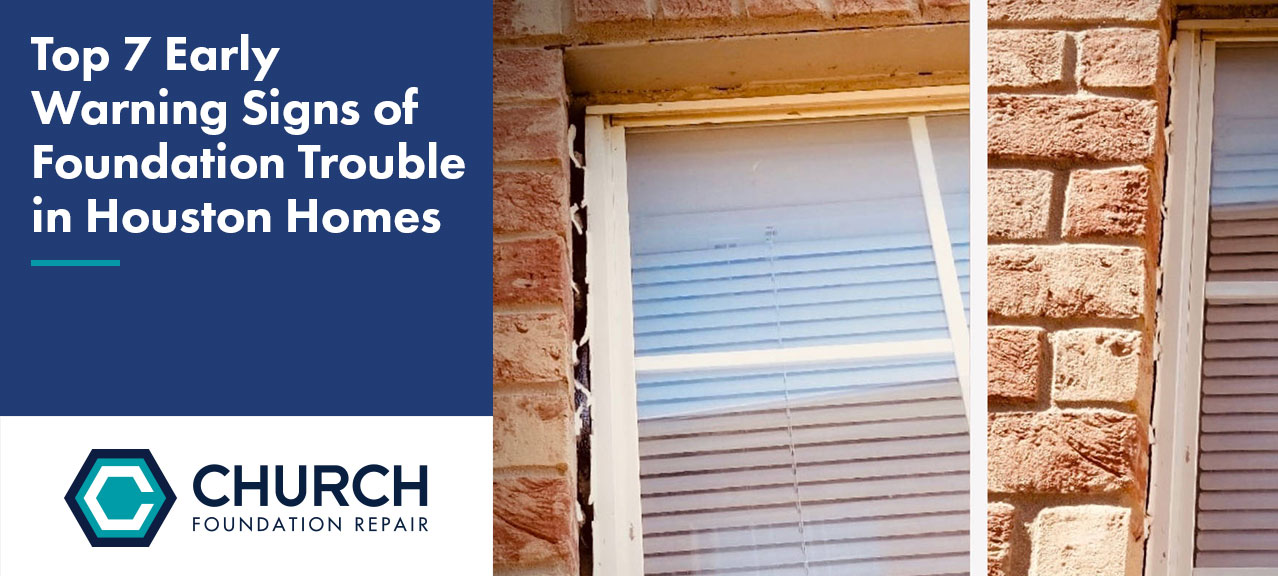
You walk through your front door after work and notice it’s sticking again. Last week, you spotted a small crack above the window in your living room. This morning, you could swear the floor in the hallway feels slightly uneven. These aren’t random problems. They’re your home trying to tell you something important.
Up to 25% of Houston residences may exhibit early foundation distress before any structural failure occurs. That’s one in four homes showing warning signs right now. The good news? Recognizing the early signs of foundation problems houston homeowners face gives you the power to act before minor issues turn into major repairs costing tens of thousands of dollars.
This guide walks you through the seven most common warning signs specific to Houston homes, explains what causes them, and helps you understand when to call for professional help.
Understanding Signs of Foundation Issues in Houston Homes
Houston sits on some of the most challenging soil in the country for home foundations. Our expansive clay soil, particularly montmorillonite clay, can swell by up to 30% when saturated and shrink proportionally during dry periods. This constant expansion and contraction creates relentless stress on your foundation.
The region’s climate makes things worse. Houston receives over 50 inches of rainfall annually, followed by extended periods of drought. This cycle of wet and dry conditions causes the soil beneath your home to constantly shift, expand, and contract.
Neighborhoods south of the Katy Freeway and east of Highway 288 face especially high vulnerability to foundation issues such as slab heave and differential settlement. If your home sits in these areas, staying alert to warning signs becomes even more critical.
Understanding the signs of foundation issues specific to Houston’s climate helps you protect your investment. Let’s look at the seven most important warning signs you need to watch for.
Warning Sign 1: Cracks in Brick Veneer Houston Homeowners Notice
Cracks in your home’s exterior brick are often the first visible sign of foundation trouble. Not all cracks signal serious problems, but certain patterns demand immediate attention.
Stair-step cracks that follow the mortar joints in a diagonal pattern indicate lateral shear forces or hydrostatic pressure affecting your foundation. These cracks typically start small but widen over time as foundation movement continues.
Horizontal cracks in brick veneer represent a more serious concern. They suggest your foundation is experiencing significant lateral pressure, often from soil expansion pushing against the structure.
The appearance of cracks in brick veneer Houston properties show requires professional evaluation, especially when cracks exceed 1/4 inch in width or continue to widen over several months. Take photos with a ruler for scale and date them. This documentation helps you track whether cracks are stable or actively growing.
Separation between bricks or bulging siding can signal that the foundation is shifting. When you notice these signs, it’s time to schedule a professional inspection.
Warning Sign 2: Doors Sticking Houston House Residents Experience
Doors that suddenly stick or won’t close properly rank among the most common early warning signs. This happens when foundation movement causes door frames to shift out of square.
The issue of doors sticking Houston house owners experience typically worsens after heavy rainfall when the soil swells and pushes the foundation upward unevenly. You might notice exterior doors become harder to open during wet seasons and easier during dry periods.
Misalignment occurs when the foundation shifts, causing frames to warp and making doors and windows difficult to operate. If you find yourself having to push, pull, or lift doors to get them to close, your foundation is likely moving.
Pay special attention when:
- Multiple doors throughout your home stick simultaneously
- Doors that previously worked fine suddenly jam
- You notice gaps appearing around door frames
- Interior doors won’t stay closed or swing open on their own
Consistent issues with doors and windows can signal that the foundation is shifting. While a single sticking door might result from humidity affecting the wood, multiple doors showing problems at once points to foundation movement.
Warning Sign 3: Uneven Floors Houston Home Owners Discover
Floors that feel uneven, sloped, or bouncy indicate one side of your foundation is settling more than the other. This differential settlement creates noticeable dips or inclines across your floor surface.
Noticing uneven floors Houston home owners walk on daily signals potential foundation settlement. You might first detect this when furniture that previously sat level now rocks or when you drop a marble and watch it roll across the room.
A noticeable incline or bouncy feel in floors can indicate differential settling of the foundation. Sagging or sloping can indicate one side of the foundation is settling more than the other, leading to noticeable dips or bounciness.
Check for floor problems by:
- Placing a marble on the floor and watching if it rolls
- Using a level to measure slopes across rooms
- Noting areas where floors feel soft or springy
- Observing whether furniture sits level
Cracks in flooring or tile result from stress on rigid materials due to foundation movement. Tile floors are particularly sensitive to foundation shifts and often crack in patterns that follow the direction of stress.
Warning Sign 4: Wall and Ceiling Cracks
Interior wall cracks tell an important story about what’s happening beneath your home. While hairline cracks can result from normal settling, certain crack patterns signal active foundation problems.
Diagonal cracks in drywall frequently form at the corners of windows and doors, indicating stress from uneven foundation movement. These cracks often appear as hairline fissures that develop into diagonal or stair-step patterns, indicating stress from foundation settlement or heave.
Jagged cracks, especially those running at a 45-degree angle, indicate serious foundation movement and should not be ignored. Damage often appears above window frames, indicating stress from foundation issues.
Monitor cracks carefully:
- Photograph cracks with a ruler for scale
- Date all photos
- Measure crack width monthly
- Note whether cracks widen after rain or drought
Gaps between walls, ceilings, and floors can widen with seasonal moisture changes, indicating independent movement of the structure. These separation gaps represent areas where different parts of your home are moving at different rates due to uneven foundation settlement.
Warning Sign 5: Gaps and Separations
Gaps appearing between structural elements signal that your home is literally pulling apart as the foundation shifts. These separations often start small but widen over time.
Common separation points include:
- Walls pulling away from ceilings
- Walls separating from floors
- Crown molding showing gaps
- Baseboards pulling away from walls
- Exterior walls separating from attached structures
Gaps around windows and doors can widen over time, indicating ongoing movement of the foundation. These gaps can allow moisture and pests to enter, representing both a foundation issue and a secondary problem.
When you notice gaps widening seasonally, it indicates your foundation is responding to Houston’s wet-dry cycles. The soil expands during rainy periods and contracts during drought, causing your foundation to move up and down. This movement creates stress at connection points throughout your home.
Warning Sign 6: Foundation Cracks in Houston Homes
Visible cracks in the concrete slab or foundation walls themselves represent direct evidence of foundation stress. Not all foundation cracks require immediate repair, but understanding which ones demand attention is critical.
Hairline cracks less than 1/8 inch wide are common in concrete and usually not concerning. These often result from concrete curing and normal settling. However, cracks that continue to widen or exceed 1/4 inch require professional evaluation.
Horizontal cracks in the foundation itself can indicate hydrostatic pressure, representing a serious concern. These cracks suggest the foundation is experiencing significant lateral pressure from soil expansion.
Knowing when to worry about foundation cracks houston experts recommend depends on several factors:
- Crack width (wider than 1/4 inch is concerning)
- Crack pattern (horizontal cracks are more serious than vertical)
- Rate of change (rapidly widening cracks demand immediate attention)
- Location (cracks at stress points like corners are more significant)
A tilting chimney that leans away from the house suggests differential soil movement and loss of support. This is one of the more dramatic exterior signs and typically indicates significant foundation movement requiring immediate professional evaluation.
Warning Sign 7: Water Pooling and Drainage Issues
Water pooling near your foundation indicates improper drainage that can contribute to foundation problems. This standing water leads to soil oversaturation and increased foundation stress.
Poor drainage systems allow water to collect near the foundation, leading to oversaturation of the soil and increasing the risk of structural damage. Signs of drainage issues include standing water, mold growth, and soft soil around the foundation.
Address drainage problems by:
- Installing gutters and ensuring they direct water away from the foundation
- Extending downspouts at least 5-6 feet from your home
- Grading your yard so water flows away from the house
- Installing French drains in problem areas
Proper drainage away from the foundation is crucial. Ensuring water flows away from your home prevents soil oversaturation and reduces foundation stress.
When to Worry About Foundation Cracks Houston Experts Explain
Understanding when to escalate from monitoring to professional intervention can save you thousands of dollars and prevent serious structural damage.
Schedule immediate professional evaluation if you observe:
- Horizontal cracks in the foundation
- Rapidly worsening symptoms (changes within weeks)
- Multiple warning signs appearing simultaneously
- Chimney lean or separation
- Doors or windows becoming completely inoperable
- Pronounced floor slopes affecting daily living
If multiple signs are observed, especially those that worsen, it is advisable to consult a professional for a thorough inspection. The presence of multiple warning signs simultaneously indicates systemic foundation issues rather than isolated settling.
Delaying repairs can lead to higher costs and further damage to the home. The importance of addressing foundation issues quickly cannot be overstated, as postponing intervention can result in escalating costs and potential safety hazards.
Ignoring early warning signs can lead to severe structural, plumbing, and safety hazards, significantly increasing repair costs.
Scheduling Your Houston Foundation Inspection
A thorough houston foundation inspection includes elevation surveys and soil moisture testing to provide detailed measurements and professional assessment. Many reputable Houston foundation repair companies offer free foundation inspection services, where certified inspectors evaluate foundation condition at no cost.
These inspections include taking real measurements and providing honest assessments without obligation. A professional inspection typically takes 1 to 2 hours for thorough foundation condition assessment.
What to expect during inspection:
- Exterior and interior visual assessment
- Elevation survey to measure foundation levelness
- Soil moisture testing around the perimeter
- Drainage evaluation
- Detailed report with photos and measurements
- Repair recommendations and cost estimates
Church Foundation Repair has served more than 10,000 satisfied customers throughout Texas and Oklahoma. We offer free and accurate estimates with no obligation.
Frequently Asked Questions
Are foundation problems a common thing in Houston?
Yes, foundation problems are extremely common in Houston due to our expansive clay soil and weather patterns. Up to 25% of Houston residences may exhibit early foundation distress. The combination of clay soil that can swell by up to 30% when saturated and our cycle of heavy rainfall and drought creates ongoing stress on foundations throughout the region.
How do you know when you have to repair your foundation?
You should consider foundation repair when you notice multiple warning signs appearing together, cracks that continue to widen over time, or doors and windows becoming progressively harder to operate. If multiple signs are observed, especially those that worsen, it is advisable to consult a professional for a thorough inspection. A free professional inspection provides detailed measurements and helps you understand the severity of the problem.
How to determine if your foundation issue is an emergency?
Foundation issues become emergencies when you observe horizontal cracks in the foundation, rapidly worsening symptoms within weeks, chimney lean or separation, or doors and windows becoming completely inoperable. Horizontal cracks in the foundation itself can indicate hydrostatic pressure, representing a serious concern. Any of these signs warrant immediate professional evaluation to prevent further damage and potential safety hazards.
Can I monitor foundation cracks myself before calling a professional?
Yes, homeowners can effectively monitor foundation cracks by keeping a photo log of any cracks, marking their sizes, and monitoring changes over time. Take photos with a ruler for scale, date all photographs, and photograph the same locations monthly. This documentation provides valuable baseline data for tracking progression and helps professionals assess the rate of change during inspections.
How long do foundation repairs take in Houston?
The timeline for foundation repairs in the Houston area typically ranges from 1 to 3 days. Slab foundations common in newer homes take 2 to 3 days to complete, while pier-and-beam foundations require 1 to 2 days for repairs. Minor repairs may be completed in less than a day, while more severe damage could require multiple days of work.
Protect Your Houston Home from Foundation Damage
The signs of foundation issues often appear gradually, making them easy to miss without regular monitoring. Houston’s unique combination of expansive clay soil and extreme weather cycles creates ongoing challenges for home foundations throughout the region.
Recognizing the early signs of foundation problems houston homeowners face gives you the power to act before minor issues escalate into major repairs. The difference between a $500 repair and a $15,000 reconstruction often comes down to how quickly you respond to warning signs.
Take action today:
- Conduct a walk-through of your home using the seven warning signs as a checklist
- Start photographing any cracks, gaps, or uneven areas you discover
- Monitor these areas monthly to track changes
- Address drainage issues around your foundation immediately
- Schedule a free professional inspection if you notice multiple warning signs
For over 45 years, our family-owned team has specialized in expert foundation repair helping homeowners throughout Texas. We understand the unique challenges Houston’s soil and weather create. Our team provides honest assessments and solutions tailored to your specific situation.
Don’t wait until minor warning signs become major structural problems. Early detection and professional intervention protect your home’s value and your family’s safety. Contact our team today for a free foundation evaluation. We’ll assess your home’s condition, explain any issues we find, and provide straightforward recommendations for protecting your investment.